Credit Balance Services
In the complex world of healthcare billing, credit balances can quietly drain resources and distort financial records. A credit balance occurs when a patient or payer pays more than the amount owed for services rendered. Managing these balances efficiently is critical for maintaining financial accuracy, compliance, and patient satisfaction.
Common Causes of Credit Balances
Credit balances usually arise from:
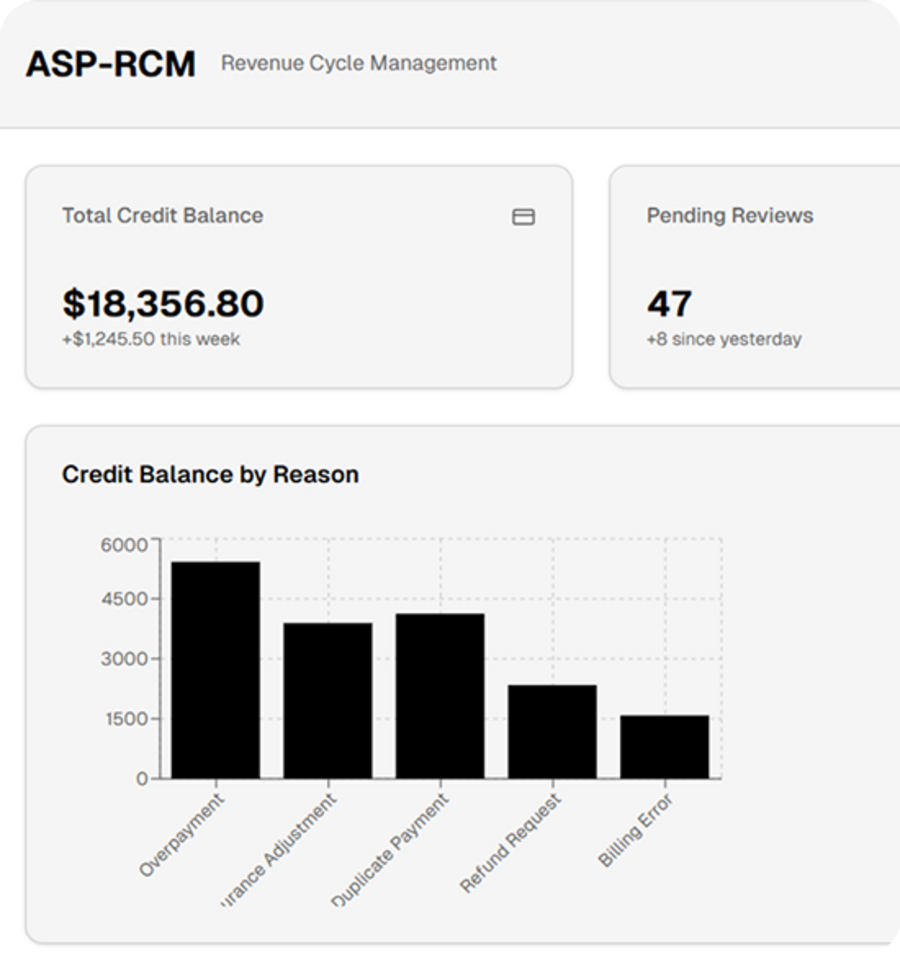
Overpayments by insurance companies due to claim miscalculations or duplicate payments.
Patient overpayments for co-pays, deductibles, or self-pay services.
Billing errors or posting mistakes in the electronic health record (EHR) system.
Contractual adjustments applied after payment processing.
Left unchecked, these balances not only inflate accounts receivable but also create compliance risks with federal and state regulations.
The Role of Credit Balance Services
Healthcare providers use Credit Balance Services to identify, reconcile, and resolve these overpayments efficiently. These services typically include:
Account Analysis & Verification Comprehensive audits of accounts receivable to pinpoint credit balances, including hidden or aged overpayments.
Reconciliation & Adjustment Matching payments to charges, correcting errors, and applying adjustments accurately to maintain clean financial records.
Refund Management Ensuring timely refunds to patients or payers, in compliance with Medicare, Medicaid, and other regulatory requirements.
Reporting & Monitoring Regular reporting and analytics to provide insight into credit balance trends, resolution timelines, and financial impact.
Benefits of Credit Balance Services
Regulatory Compliance: Avoid fines, audits, and penalties by processing refunds correctly and on time.
Financial Accuracy: Ensure accounts reflect true revenue, improving budgeting and decision-making.
Operational Efficiency: Reduce manual work for billing staff and allow focus on revenue-generating tasks.
Enhanced Patient Relations: Quick and accurate refunds improve patient satisfaction and trust.
Best Practices
To maximize the effectiveness of credit balance management:
Automate overpayment detection and posting in the EHR system.
Conduct periodic audits of aged accounts to prevent accumulation of unresolved balances.
Train billing staff on proper payment posting and refund procedures.
Partner with specialized RCM providers if in-house resolution is resource-intensive.
Conclusion
Credit Balance Services are more than just a back-office function — they are a critical component of a healthy revenue cycle. By efficiently managing overpayments, healthcare providers can maintain accurate financial reporting, ensure compliance, and enhance patient trust, ultimately contributing to smoother operations and improved financial performance.